Disclaimer: Info Tech. This site provides computers and technology news for informational purposes only.
Technological advancements have started to fundamentally transform the landscape of local urgent veterinary care, enabling quicker and more efficient services for pets in need. As veterinary practices integrate these innovations, they find themselves better equipped to handle emergencies, improve diagnostics, and foster stronger connections with pet owners.
What are the newest technologies used in local urgent veterinary care?
Diagnostic Imaging Technologies
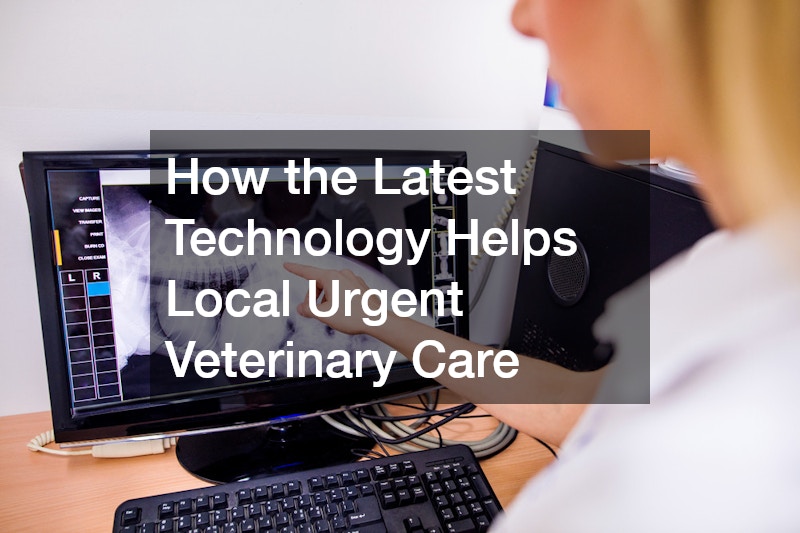
With the advent of advanced imaging technologies such as CT scans and MRIs, veterinarians can now diagnose complex conditions with unprecedented accuracy. These tools provide detailed insights into a pet’s anatomy, facilitating precise treatment plans.
Such imaging capabilities allow veterinarians to identify critical issues that may not be visible through conventional methods. This not only enhances the efficacy of treatments but also reduces the time pets spend in discomfort.
As these technologies become more widely adopted, the scope of conditions that can be diagnosed and treated in-house is expanding, ultimately leading to faster and more effective care in various veterinary settings.
Telemedicine in Veterinary Care
Telemedicine has gained significant traction in veterinary care, allowing pet owners to connect with veterinarians remotely. This revolutionizes access to urgent care, particularly in situations where travel might exacerbate a pet’s condition.
Through video consultations and telehealth platforms, veterinarians can provide critical guidance and interim care, minimizing the stress for both pets and their owners. The instantaneous nature of these consultations ensures that medical advice is dispensed promptly.
Additionally, telemedicine expands the reach of specialized care, connecting pet owners with experts who might not be available in the immediate vicinity. This can be especially beneficial in rural or underserved areas.
How do these technologies improve response times?
Real-Time Data Access
Immediate access to a pet’s medical history and real-time data significantly cuts down on wait times in urgent care scenarios. This is a crucial advantage that technology brings to modern veterinary practices.
By streamlining the retrieval and analysis of medical records, veterinarians can make informed decisions faster, effectively reducing the turnaround time for delivering care. This optimization is vital during emergencies where every second counts.
Moreover, centralized data systems can facilitate inter-vet communication, allowing for collaborative decision-making that is both swift and insightful.
Rapid Communication Tools
The use of rapid communication tools between veterinarians and pet parents ensures that both parties remain updated and informed throughout the care process. Enabling instant messaging or dedicated apps means that critical updates are relayed without delays.
These platforms also empower pet owners to share vital signs or symptoms in real-time, aiding vets in making quicker assessments. This becomes particularly valuable during non-business hours when immediate professional guidance is needed.
To further enhance this communication, many practices are integrating chatbots and AI-driven assistants to provide immediate answers to common queries, thereby streamlining the initial assessment process.
How is technology enhancing diagnostic accuracy?
Automated Laboratory Systems
The introduction of automated laboratory systems in veterinary clinics has elevated the accuracy and speed of diagnostics. These systems efficiently handle a range of tests, producing results that are both swift and reliable.
This advancement minimizes the potential for human error, standardizing results across the board. Consequently, veterinarians can trust these automated outputs, allowing for more confident diagnoses.
Additionally, the capability to run multiple tests simultaneously means that a comprehensive overview of a pet’s health is available quickly, expediting the treatment process.
AI-Assisted Diagnostics
Artificial Intelligence is playing a transformative role in the field of veterinary diagnostics, providing sophisticated data interpretation for intricate conditions. AI algorithms can analyze patterns and anomalies far more quickly than traditional methods.
This not only enhances diagnostic accuracy but also opens avenues for personalized treatment strategies, making each pet’s care uniquely tailored. The precision offered by AI ensures that treatments are more effective, reducing the trial-and-error approach.
Furthermore, AI’s predictive capabilities can alert veterinarians to potential health deteriorations before they manifest clinically, offering a proactive approach to pet health management.
What are the cost implications for pet owners?
Cost-Effective Solutions
While the integration of new technology in veterinary care might seem costly initially, it often leads to long-term savings for pet owners. Technology can reduce the duration of illnesses and streamline procedures, ultimately decreasing overall care costs.
For instance, with accurate and fast diagnostics, the need for repetitive testing is minimized, thereby cutting down on expenses. As these technologies become more commonplace, their cost is expected to decrease, making them accessible to a wider audience.
Moreover, by preventing unnecessary treatments and focusing on targeted care, pet owners can manage their resources more effectively while ensuring their pets receive the best possible care.
Investment vs. Long-Term Benefits
When weighing the cost of technological investments against their benefits, it becomes clear that the potential for long-term savings and improved health outcomes is significant. Technologies that seem expensive up front are often justified by their efficiency and precision.
In the broader picture, such investments not only enhance the reputation of veterinary practices but also provide peace of mind to pet parents. Knowing that their pets are receiving cutting-edge care is invaluable.
Overall, while upfront costs may be higher, the enhanced outcomes and long-term savings contribute to a more sustainable model of local urgent veterinary care.